
How Does Ford Bronco, Bronco Sport & Bronco II Compare In Size?
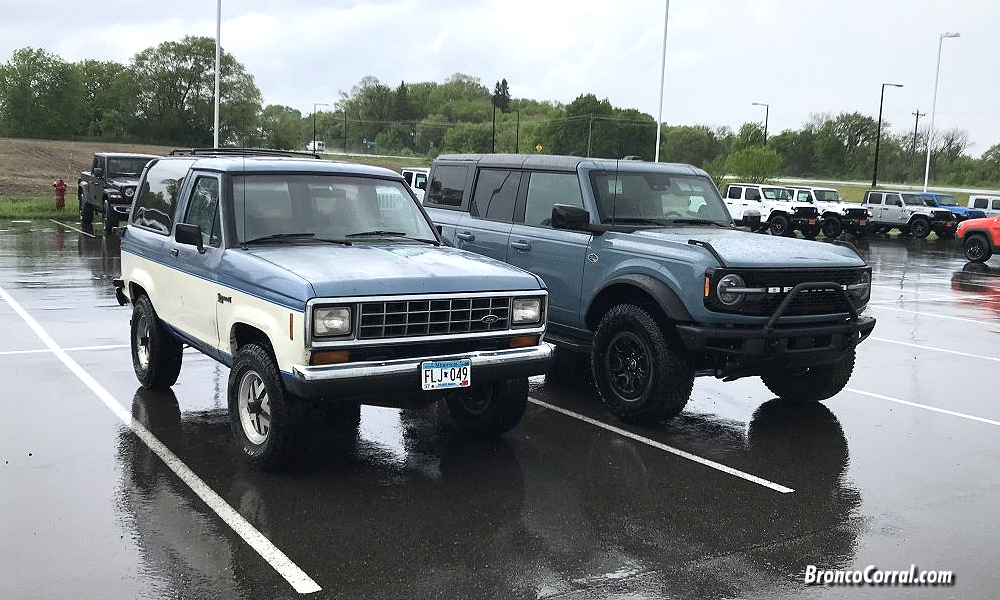
When the Ford Bronco returned 2021 it was supposed to be inspired by the early Ford Bronco. Ironically, the Ford Bronco II was actually very close in size to the early Bronco. So how do these Bronco’s all compare in size?
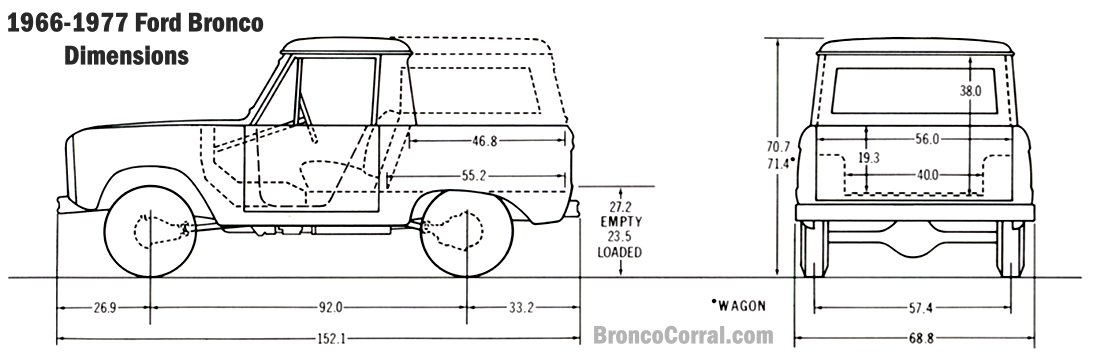
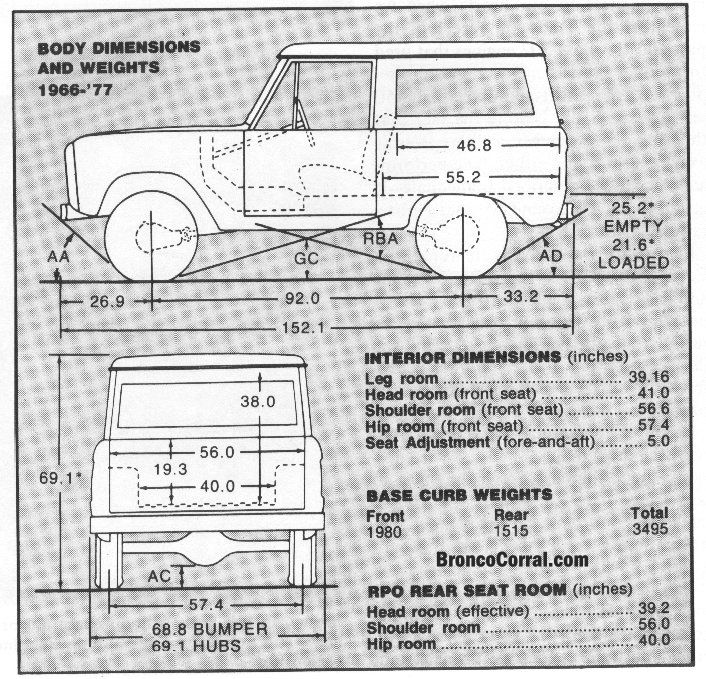
Bronco Size Comparison Chart
| Vehicle | Overall Width | Overall Length | Overall Height | Track Width | Wheelbase |
| 1966-1977 Ford Bronco | 68.5 in | 151.5 in | 71.6 in | 57.4 in | 92.0 in |
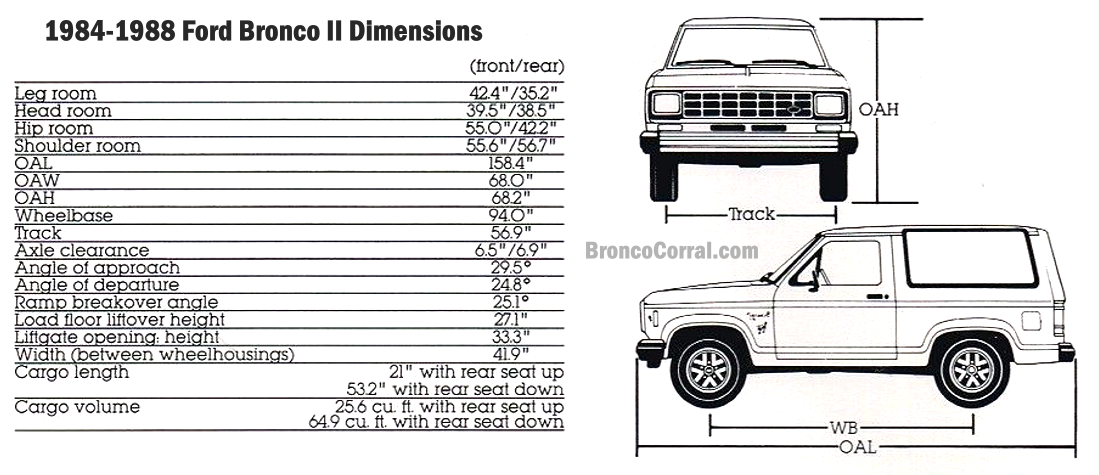
| 1984-1988 Ford Bronco II | 68.0 in | 158.3 in | 68.2 in | 56.9 in | 94.0 in |
| 1989-1990 Ford Bronco II | 68.0 in | 161.9 in | 69.9 in | 56.9 in | 94.0 in |
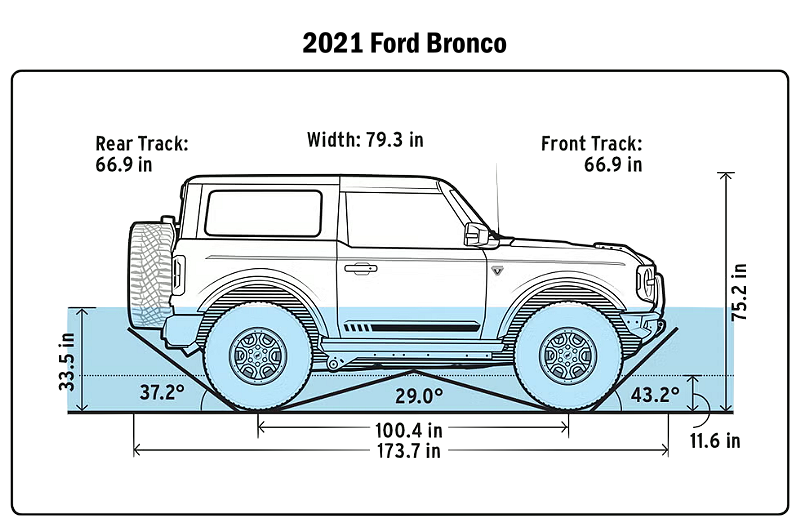
| 2021 Ford Bronco 2-Door | 75.9 in | 173.7 in | 71.9 in | 65.0 in (1) | 100.4 in |
| 2021 Ford Bronco 4-Door | 75.9 in | 189.4 in | 73.0 in | 65.0 in | 116.1 in |
| 2021 Ford Bronco Sport | 74.3 in | 173.7 in | 70.2 in | 63.4F 62.8R in | 105.1 in |
Notes: (1) Wildtrack track width is 66.9 in.
1966-1977 Ford Bronco vs 1984-1990 Ford Bronco II
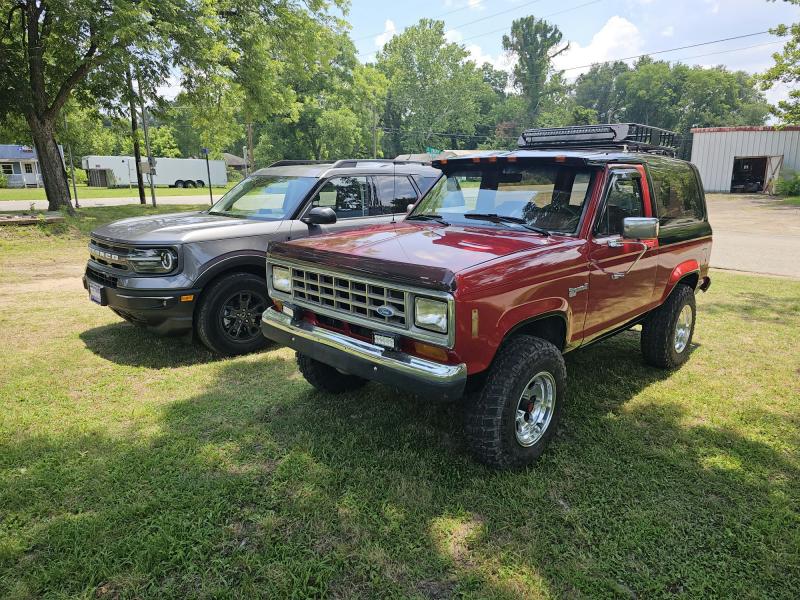
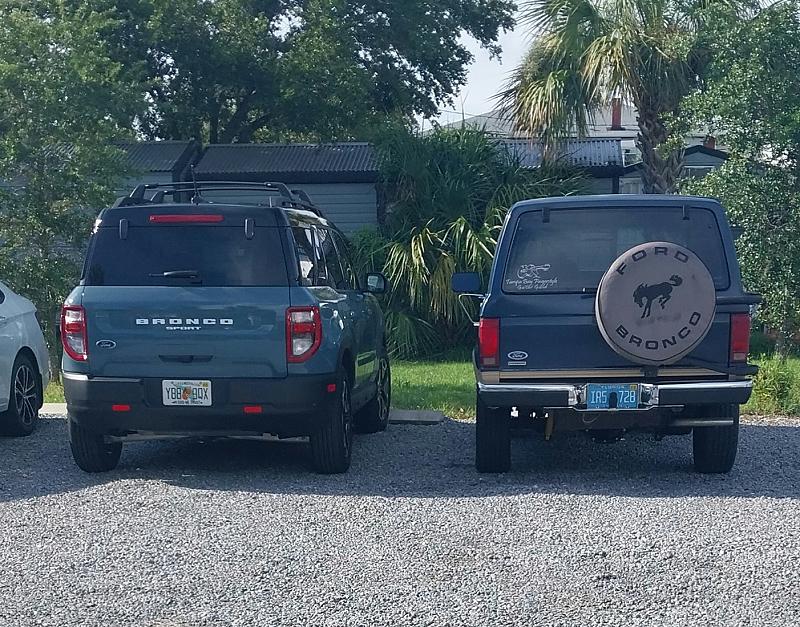
It’s interesting how the 1966 Ford Bronco and the 1984-1990 Ford Bronco II are nearly identical in size.
Compared to the 1966-1977 Ford Bronco, The Bronco II is
- 0.5″ Narrower
- 6.8″ Longer
- 3.4″ Lower
- 0.5″ Narrower Track Width
- 2.0″ Longer Wheelbase
The Bronco II got a reputation for not handling well and rolling over, but that was more of a problem on the 2WD models. What makes that even crazier is everyone I have ever known that has a Bronco II has built them for off-road. So, what caused them to handle differently?
The early Bronco’s robust solid front axle provided superior geometric stability during hard cornering and lateral shifts because the wheel angles (camber) remained consistent, offering predictable, albeit rougher, handling. The Bronco II’s TTB independent suspension, while delivering a smoother ride by allowing each wheel to move independently over bumps, suffered from a critical flaw: its geometry caused significant positive camber changes during suspension compression or hard cornering, drastically reducing tire contact patch and grip. This dynamic instability made the TTB more prone to “tripping” on the outer tire edge and rolling over in emergency maneuvers compared to the more rugged, consistent behavior of the original solid axle design.
When Ford introduced the Explorer, it came with a Dana 35 TTB which was 2-inches wider and made the Bronco II more stable. This was something Ford engineers recommended after testing the Bronco II, but Ford built it anyway.
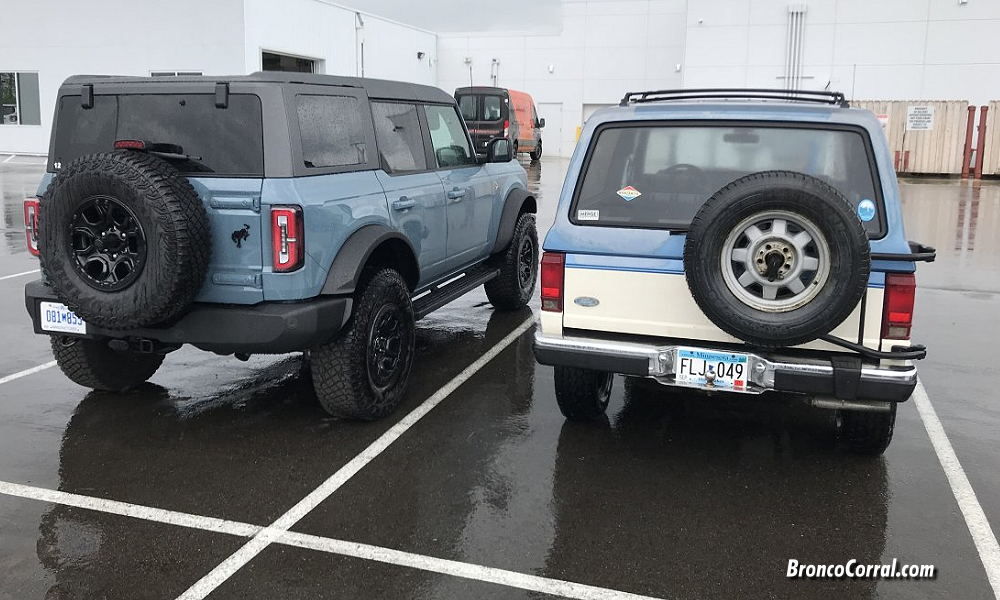
2021 Ford Bronco 2-Door vs 1984-1990 Ford Bronco II
Compared to the 2021 Ford Bronco 2-door, The Bronco II is
- 7.9″ Narrower
- 11.8″ Shorter
- 2.0″ Shorter
- 8.1″ Narrower Track Width
- 6.4″ Shorter Wheelbase
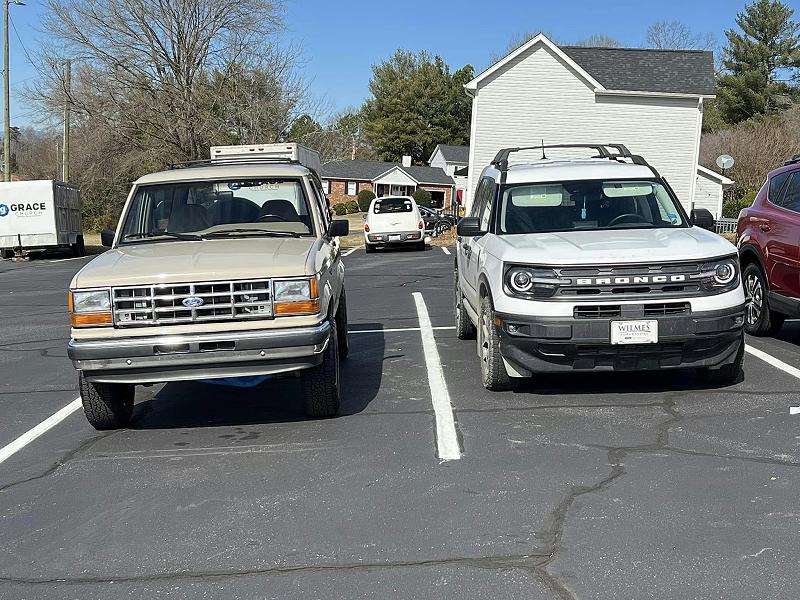
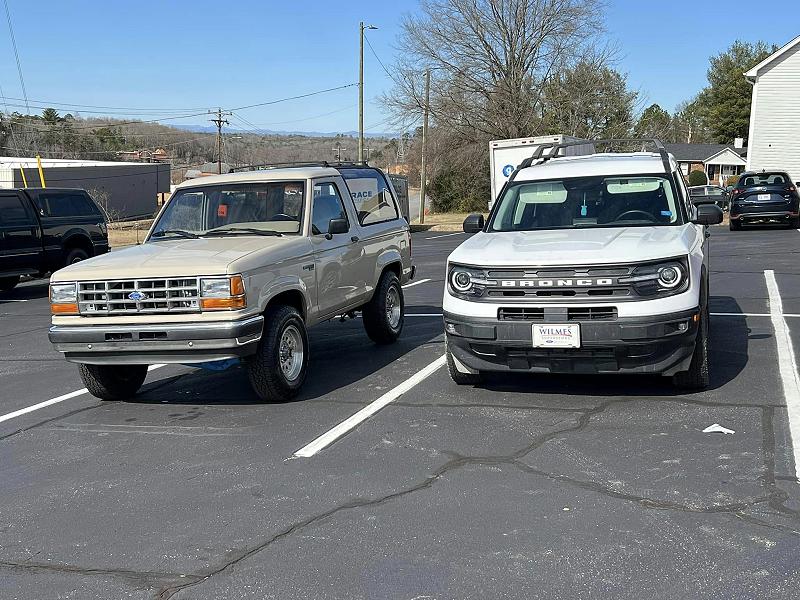
2021 Ford Bronco Sport vs 1984-1990 Ford Bronco II
Compared to the 2021 Ford Bronco Sport, The Bronco II is
6.3″ Narrower
11.8″ Shorter
0.3″ Lower
6.8″ Narrower Track Width
11.1″ Shorter Wheelbase
Conclusion
As you can see, the Ford Bronco II is much closer to the Early Bronco than the new Bronco and Bronco Sport. Had Ford built the Bronco II with the wider Dana 35 TTB, 8.8-Inch, and 4.0L V6, it would definitely have been a contender to its predecessor.
Photo Comparisons
Size Comparison Diagrams
Related Articles
2021 Ford Bronco Specifications
1984-1990 Ford Bronco II Specs & Facts
Ford Bronco II Common Upgrades
About The Author

Jim Oaks is a longtime Ford truck and SUV enthusiast and the founder of The Ranger Station and Bronco II Corral. With decades of hands-on experience, he writes both technical and non-technical articles covering the Ford Bronco II, including mechanical systems, factory engineering, common upgrades, and detailed feature vehicle write-ups.
In addition to technical content, Jim documents Bronco II history, rare factory and aftermarket models, production details, and original Ford marketing materials. His work is based on firsthand experience, original documentation, and long-term involvement in the Ford enthusiast community.
Through his sites, Jim has built comprehensive reference libraries that serve owners, builders, restorers, collectors, and historians, helping preserve the Bronco II’s technical knowledge and historical significance.