
Fender Cutting 101 for Ford Bronco II Owners
This step-by-step guide shows you how to safely cut and modify the front and rear fenders on your 1983-1990 Ford Bronco II. Whether you are installing larger 33-inch tires, adding a 1-inch body lift, or using coil spacers, this guide covers everything from planning your cuts to modifying the plastic inner fender and sealing gaps. Learn the proper tools, preparation steps, and techniques for front and rear fender cutting, trimming, and custom body work to prevent tire rubbing and maintain a clean finish.
Keywords: Ford Bronco II fender cutting, Bronco II fender modification, cutting Bronco II fenders, Bronco II front fender trim, Bronco II rear fender wheel well, 33-inch tire clearance Bronco II, DIY Bronco II body work, off-road Bronco II modifications
Front Fenders
Start by figuring out how much of your Bronco II front fender you want to remove. For example, I was installing 33-inch tires on an ’89 Bronco II with a stock suspension, a 1-inch body lift, and 1/2-inch coil spacers. Once you know how much metal to cut, the actual fender cutting becomes straightforward.
NOTE: Measure twice, cut once!
Once you start cutting, there is no turning back!
Have a plan and cut carefully.
I began by removing the front fenders to access the plastic inner fender. Cutting the inner fender removes the lip that supports it, so proper planning is critical.
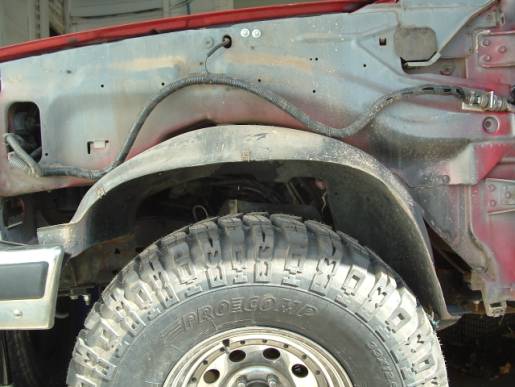
I used tin snips to make slits in the inner fender, starting from the middle and working outward. After each cut, I secured the piece with self-tapping sheet metal screws to the cowl support. Be cautious of wiring harnesses and check screw tips to avoid contact.

To protect hinges and interior panels (especially if you have removable doors), I used Plexiglas and aluminum angle iron to cover gaps created by cutting the inner fender. Using the doors as a template, I trimmed and installed these pieces for a tight, professional fit.
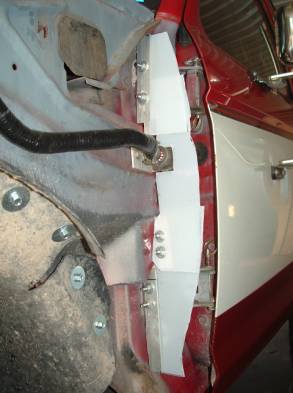
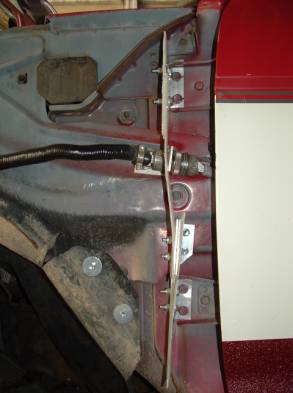
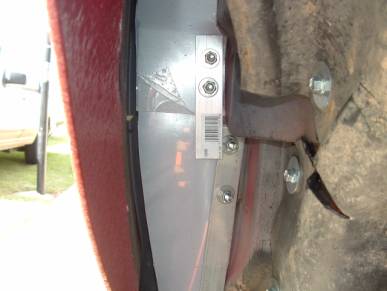
I cut about 1 inch up along the factory flare crease on the ’89 Bronco II. I taped the fender and marked it with a Sharpie before cutting. A plasma cutter works best, but a cutoff wheel or jig saw also works. After cutting, reinstall the fender and test tire clearance.

Rear Fenders
The rear is where it gets really tricky because you will actually be cutting into the wheel well and it will leave a gap depending on how much metal you remove. (The more you remove the larger gap you will have.)
CAUTION: You might want to remove your interior panels prior to cutting if you are using a Plasma Cutter or a Sawzall to keep from damaging your panels.
I decided to cut the rear to match the front. I used a Plasma Cutter and cut though the outside fender. Once I had my first cut, I used pliers to bend the fender down where it was cut to gain access to the inside of the wheel well. Once opened up I again used the Plasma Cutter to cut the wheel well using the outer cut as a guide.
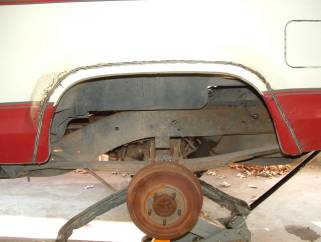
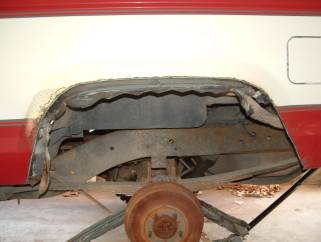
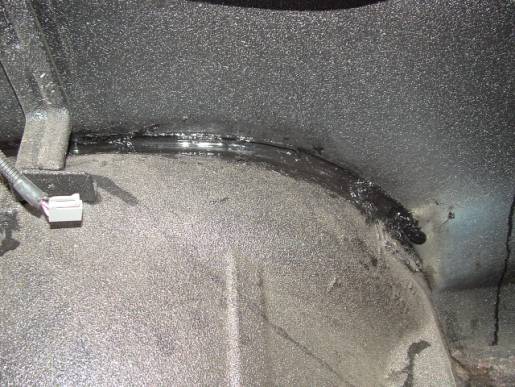
Here is a picture from the inside showing the gap that I created.
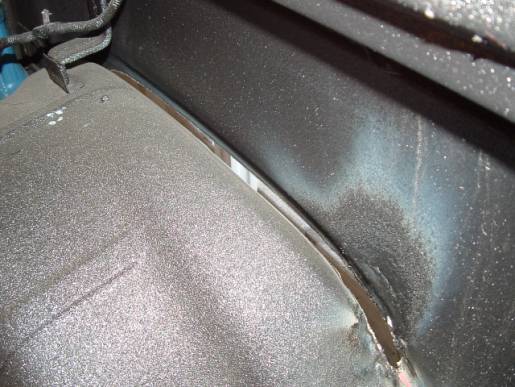
I closed the gap by pushing heater hose down into the gap until it was flush with the bottom and covering it all with sealant. (Sorry I don’t have pictures of it) I also applied the sealant to the bottom side to ensure all gaps were covered.
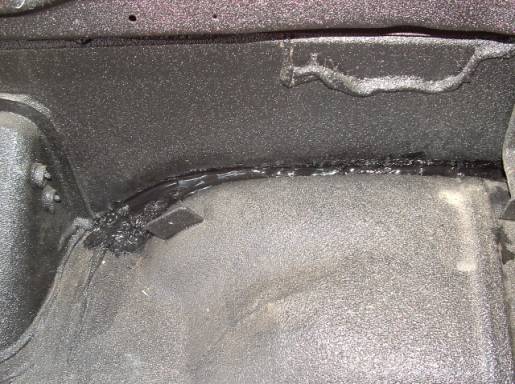
Here Is The Final Product
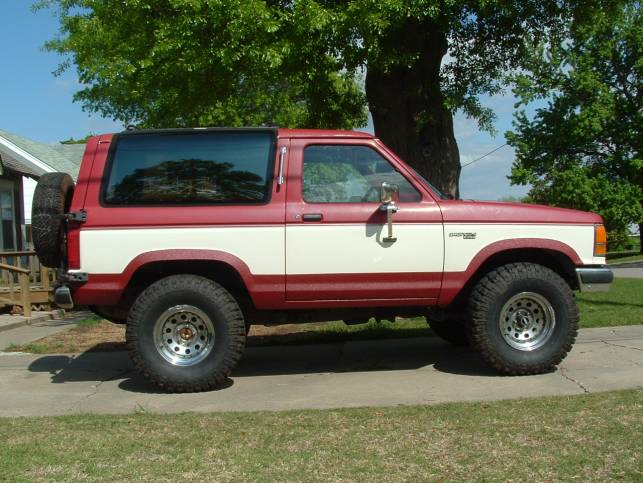
33-inch tires with only a 1-inch Body Lift and 1/2-inch coil spacers!
Last Updated:
About The Author
Jim Oaks is a longtime Ford truck and SUV enthusiast and the founder of The Ranger Station and Bronco II Corral. With decades of hands-on experience, he writes both technical and non-technical articles covering the Ford Bronco II, including mechanical systems, factory engineering, common upgrades, and detailed feature vehicle write-ups.
In addition to technical content, Jim documents Bronco II history, rare factory and aftermarket models, production details, and original Ford marketing materials. His work is based on firsthand experience, original documentation, and long-term involvement in the Ford enthusiast community.
Through his sites, Jim has built comprehensive reference libraries that serve owners, builders, restorers, collectors, and historians, helping preserve the Bronco II’s technical knowledge and historical significance.