
Why 2WD Ford Bronco IIs Still Had a Transfer Case
Strange but true: nearly all Ford Bronco IIs—both 2WD and 4WD—were built with a transfer-case-length drivetrain.
Yes, even the 2WD Bronco II.
In fact, most owners of 2WD Bronco IIs are completely unaware that their vehicle even has a transfer case at all.
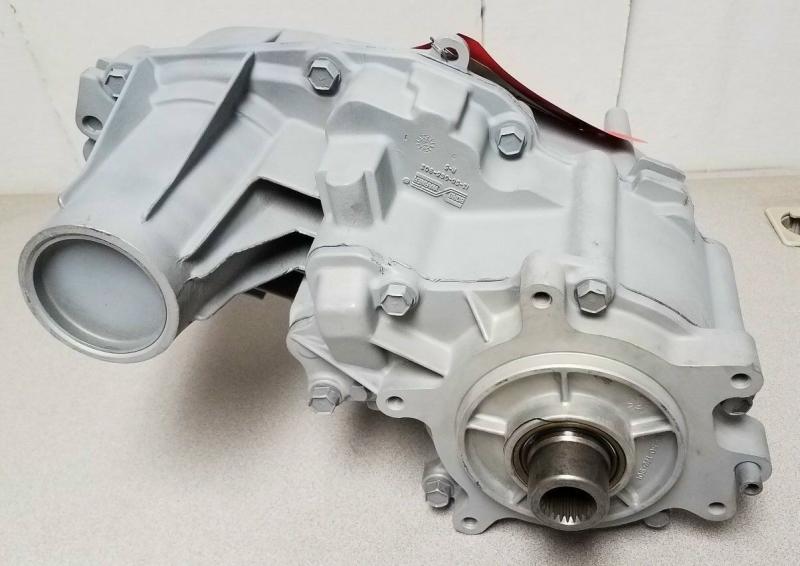
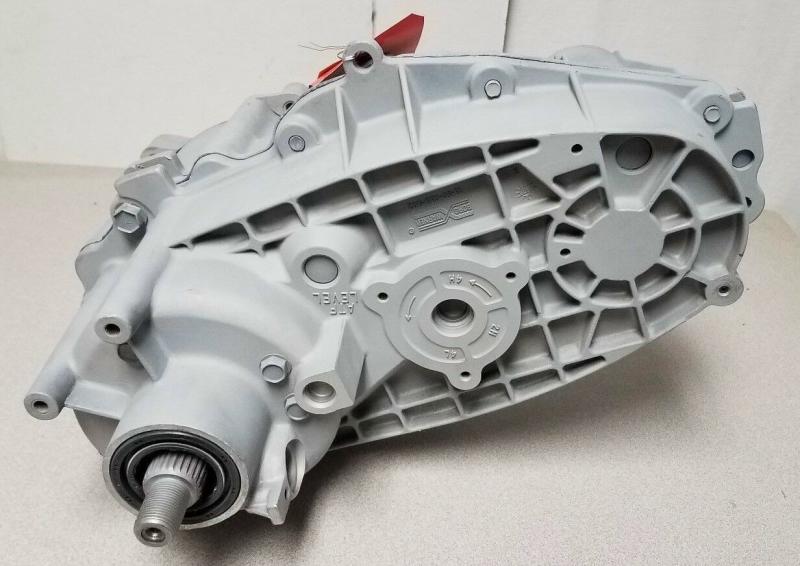
From 1984-1990, Ford equipped 2WD models with a BorgWarner unit commonly identified as the BW1359. While it resembles a conventional 4WD transfer case externally, it is not a functional four-wheel-drive unit.
Instead, the BW1359 is best described as a “dummy” or pass-through transfer case, used almost entirely for manufacturing efficiency and assembly-line standardization.
In 1990, the final year of Bronco II production, Ford began transitioning some 2WD models away from the BW1359 entirely. Ford accomplished this by using an adapter that slid onto the output shaft of the 2WD transmission. This adapter featured a four-bolt flange, allowing the rear driveshaft to bolt directly to the transmission.
What the BW1359 Actually Is
The BW1359 used in 2WD Bronco IIs is essentially an empty BorgWarner 1350-series aluminum housing.
Internally, the unit is “gutted” compared to a true transfer case.
- Aluminum case
- Rear output only
- 1:1 direct drive
- No shift mechanism
- Permanently sealed front output bore
Inside the case is a splined sleeve that connects the transmission output shaft directly to the rear driveshaft. There are no gears, no chain, and no low-range components.
Mechanically, the BW1359 functions as a drivetrain spacer and adapter, not a torque-splitting device.
What the BW1359 Is Not
Despite its appearance, the BW1359:
- Is not a functional 4WD transfer case
- Does not drive a front axle
- Does not contain a chain or planetary gearset
- Does not provide gear reduction
Calling it a “transfer case” is technically correct in catalog terms, but mechanically misleading.
Why Ford Used a Dummy Transfer Case
At first glance, this design choice seems unnecessary. Why would Ford install a transfer-case-shaped component in a vehicle that was never intended to be four-wheel drive?
The Answer: Manufacturing Standardization
Ford used the BW1359 to standardize the Bronco II drivetrain across both 2WD and 4WD models.
- Same 4WD-style transmission output shaft
- Identical drivetrain length
- Same crossmember location
- Same rear driveshaft
- No need for a unique 2WD-only transmission
On the Bronco II’s short wheelbase, even small drivetrain-length changes would have required different driveshafts, altered exhaust routing, and additional parts inventory. The BW1359 eliminated those variables.
Yes — That Means 2WD Bronco IIs Had 4WD Transmissions
Because the BW1359 bolted directly to a 4WD-style transmission, most 2WD Bronco IIs left the factory with:
- A 4WD transmission
- A transfer-case-length drivetrain
- The same rear driveshaft used on 4WD models
The only things missing were a functional transfer case and a driven front axle.
This is why many owners never realize their Bronco II has a transfer case—it never shifts, never engages, and never behaves like one.
Model Years and Applications
- Used primarily on 1986–1990 2WD Ford Bronco II models
- Found behind both:
- 2.3L diesel engines (1986)
- 2.9L Cologne engines
The 1990 Change: True 2WD Finally Appears
In 1990, the final year of Bronco II production, Ford began transitioning some 2WD models away from the BW1359 entirely.
These late-production trucks were built with:
- A true 2WD transmission
- No dummy transfer case
- A bolt-on rear driveshaft
Ford accomplished this by using an adapter that slid onto the output shaft of the 2WD transmission. This adapter featured a four-bolt flange, allowing the rear driveshaft to bolt directly to the transmission.
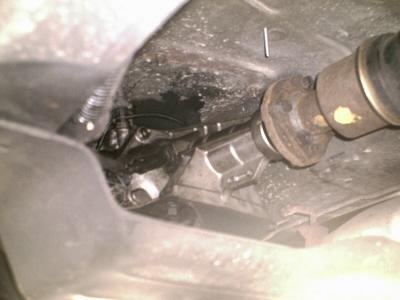
This change finally eliminated the need for the BW1359 spacer.
Lubrication and Maintenance
The BW1359 is often referred to as a “dry” case, but real-world examples vary.
- Some units contain no fluid
- Others were filled with ATF to lubricate the internal sleeve bearings
- Factory documentation is inconsistent
Because the BW1359 has no load-bearing drivetrain components, maintenance is minimal.
- Rear output seal leaks
- Worn rear U-joints
Seal kits specific to the BW1359 are still available.
Why This Matters: Easy 2WD-to-4WD Conversion
One unintended benefit of the BW1359 design is that it makes converting a 2WD Bronco II to 4WD relatively straightforward.
Because the vehicle already has:
- A 4WD-style transmission
- Correct drivetrain spacing
- Transfer-case mounting provisions
The BW1359 can be removed and replaced with a true BorgWarner BW1350 4WD transfer case.
Completing the conversion requires:
- Dana 28 or Dana 35 4WD front axle beams
- Matching 4WD beam and radius arm mounting brackets
- Front driveshaft and related hardware
Check out:
2WD to 4WD Conversion (Overview)
Converting Your Bronco II From 2WD To 4WD (Detailed)
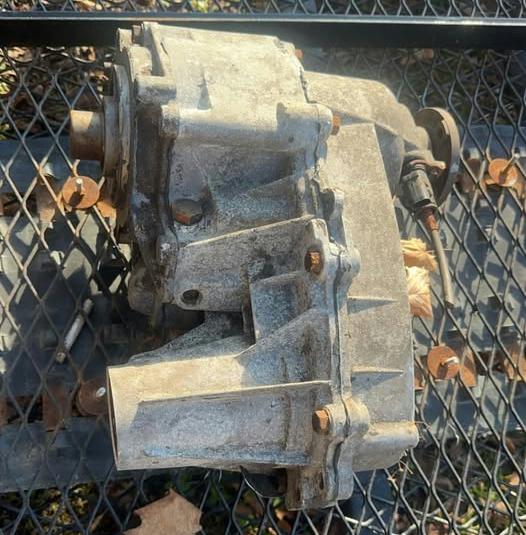
2WD Dummy Case to 4WD Transfer Case
Summary
- Most 2WD Bronco IIs used the BorgWarner BW1359
- The BW1359 is a dummy/pass-through transfer case
- Many owners are unaware it even exists
- It was used to standardize drivetrain length and production
- In 1990, Ford transitioned to a true 2WD transmission with a bolt-on flange adapter
- Its presence makes 4WD conversion easier than many expect
The BW1359 is a perfect example of how manufacturing efficiency—not drivetrain necessity—can shape vehicle design, and why the Bronco II continues to surprise even long-time owners.
About The Author

Jim Oaks is a longtime Ford truck and SUV enthusiast and the founder of The Ranger Station and Bronco II Corral. With decades of hands-on experience, he writes both technical and non-technical articles covering the Ford Bronco II, including mechanical systems, factory engineering, common upgrades, and detailed feature vehicle write-ups.
In addition to technical content, Jim documents Bronco II history, rare factory and aftermarket models, production details, and original Ford marketing materials. His work is based on firsthand experience, original documentation, and long-term involvement in the Ford enthusiast community.
Through his sites, Jim has built comprehensive reference libraries that serve owners, builders, restorers, collectors, and historians, helping preserve the Bronco II’s technical knowledge and historical significance.